
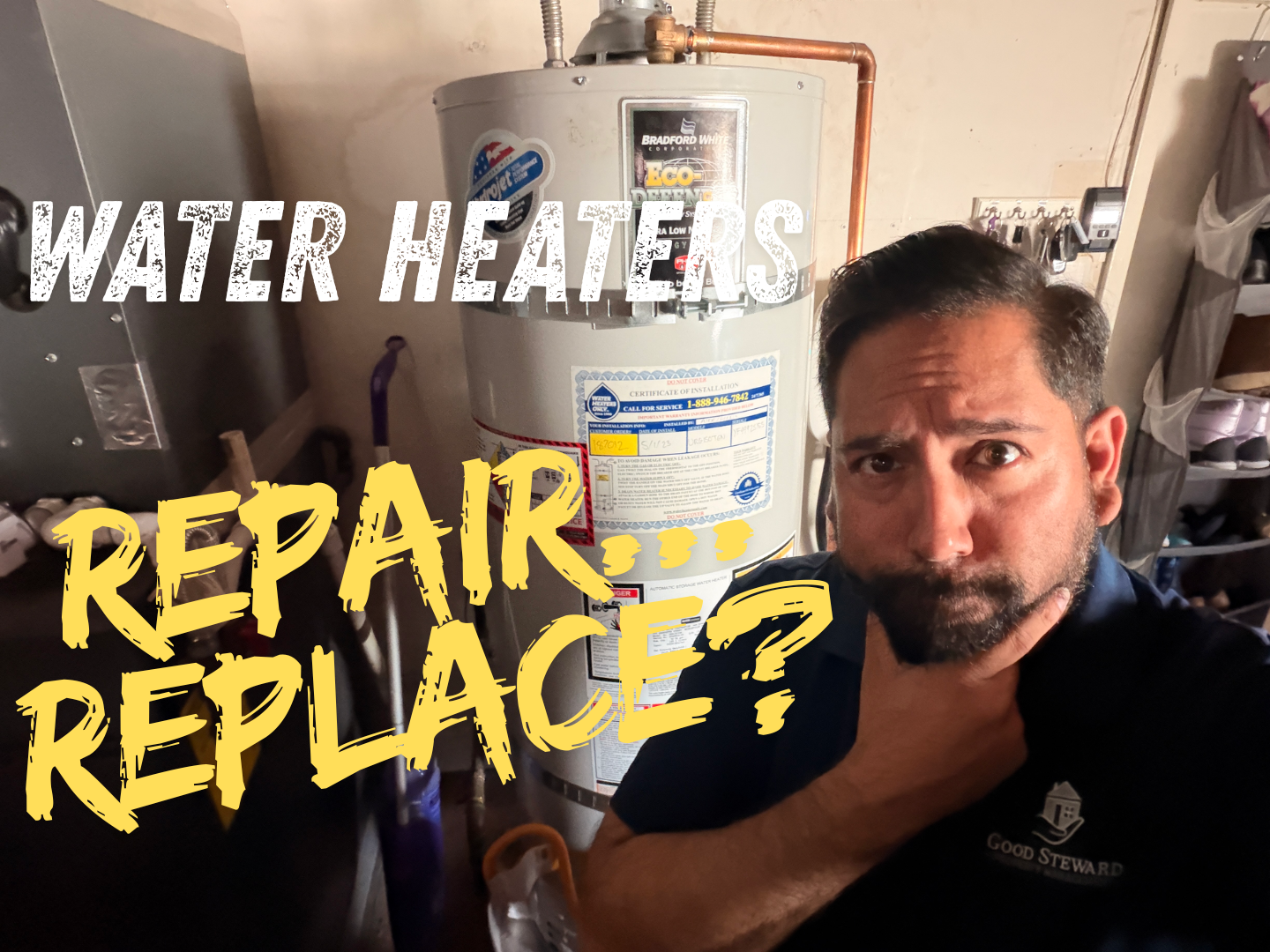
Every week Jeff & I make dozens of small decisions on behalf of owners — decisions that never make it into a monthly statement, but that directly affect the resident's experience, the property's condition and the owner's bottom line. This series pulls back the curtain on some of those calls. We'll walk you through a real situation, stop right before the decision point, and ask… What Would You Do?! Then we'll show you what we actually did, and why. In this blog we are focusing on water heaters. Lets take a look!
STORY #1: The Warranty Part That Never Came
A resident's water heater failed. It was still under manufacturer warranty — but this was actually the second part failure on this same unit in about a year.
- Day 1: The resident submits service request. No hot water.
- Day 2: To keep costs down for the owner, we call the manufacturer instead of jumping straight to a full replacement. They agree to send the part under warranty, but their timeline is 5 to 7 days. We push for a rush order and get it down to a 1-2 day best-case estimate — except this is happening over a holiday weekend, so even that isn't guaranteed.
Here's what we know at this point. A full replacement unit, installed, costs about $1,400. In California, hot water is a legal habitability requirement — if we wait, the resident is entitled to compensation of roughly $140/day (Monthly Rent $4,200). If the part does arrive, there's still a separate $350 labor charge to install it, on top of the compensation already owed. There is no guaranteed delivery date. The resident is a household with a small child and a baby.
QUESTION: WHAT WOULD YOU DO!?
- Option A: Assume best case scenario that the part will come in time and wait on the warranty part to save money?
- Option B: Replace the unit now?
- What We Did: We replaced the unit immediately therefore avoiding having to provide a per day rent credit to the resident. The warranty part didn't arrive until 8 days later! Had we waited, the owner would have owed over $1,100 in a rent credit, plus the $350 labor charge, plus whatever fees came with an emergency install once the part finally showed up. Waiting would have cost more than replacing — and the resident would have gone over a week without hot water for two young children. Our default is always to repair before replacing, to protect the owner's investment. But this is a good example of why that default needs judgment: once the math shows waiting is the more expensive option, and a legal compensation clock is already running, replacement is the responsible call.
STORY #2: Honoring an Owner's Vendor Relationship
This water heater was still under an extended manufacturer warranty the owner had paid for and… it started leaking. This time, the resident still had hot water — the leak was outside, so it wasn't threatening the property. That gave us more breathing room than Story #1. We called the manufacturer. At first, they only wanted to send a replacement part. After about half an hour of back-and-forth, we talked them into replacing the entire unit instead. Now came the vendor question. This owner has a standing relationship with their own plumber — the same one who originally installed the water heater — and he's particular about using him for anything related to that system. That plumber was a day or two out from having availability. We also had a quote ready from one of our own plumbers, who could get there faster.
QUESTION: WHAT WOULD YOU DO!?
- Option A: Bring in a faster vendor?
- Option B: Wait for the plumber the owner trusts?
- What We Did: Since the leak wasn't causing property damage and there was no urgency, we waited for the owner's plumber and let him handle it, respecting the relationship he'd already built with the vendor who installed the unit in the first place. Here's where it got complicated. The manufacturer's replacement process required physically returning the old unit: the plumber had to remove it, drive it to a store for inspection, and only then would the replacement be issued. The closest store couldn't accept the return, so he had to drive to a second location. That store processed it, and he brought the new unit back and installed it. The final bill: $1,400 — all labor, since the unit itself was free under the extended warranty. For comparison, a standalone water heater typically costs $700–900, with $300–600 in labor on top. So even with the extended warranty covering the unit itself, the replacement process ended up costing about the same as simply buying a new one outright — the manufacturer's process just moved the cost from parts into labor and drive time. This is why we present owners with two paths whenever a water heater needs replacing:
- A plumber, using a plumbing-supply unit — higher upfront cost, generally longer-lasting
- A handyman, using a big-box-store unit — lower cost, shorter lifespan
In this case, the unit was a big-box-store brand to begin with, which is part of why the warranty route didn't end up saving anyone money. Sometimes the "covered" option isn't actually the cheaper one once labor and logistics are factored in — and it's exactly the kind of detail we walk owners through before a decision is made.
Story 3: When the Owner Wanted to Try the Part Anyway
This water heater was six years old — no manufacturer warranty at all. When it failed, the owner wanted us to simply replace the broken part rather than the whole unit. One of our plumbers went out to look. He found that the part was no longer being manufactured or supplied by the original maker. The only option was a third-party version. In his experience, that specific part had a reputation for being poorly made by every third-party supplier he'd come across, and he doubted it would actually solve the problem. His recommendation… replace the unit. We reported this back to the owner.
QUESTION: WHAT WOULD YOU DO!?
- Option A: Trust the plumber's recommendation to replace the unit?
- Option B: Let the owner pursue the part their own way?
- What We Did: The owner wanted to try the part route themselves. They asked us to look for the part; when we didn't have quick luck, they went and found it on their own, buying two from two different sources to make sure one arrived quickly and planning to return whichever one showed up second. The first part arrived a day later. They hired their own plumber to install it. It didn't work. The second part arrived the following day. Their plumber went out again to install it. It didn't work either. At that point, they had one of our handyman vendors come out and replace the entire unit. By the time it was done, they had paid for two parts that didn't work, paid their own plumber for two separate service visits, paid our handyman vendor for the eventual replacement, bought the new water heater, and lost three days of rent while the unit was down.
This is exactly the scenario our plumber had flagged from the start. We don't say this to place blame — the owner was doing everything they could to solve the problem quickly and affordably, and that instinct is a good one. But it's a clear example of why we lean on our vendors' hands-on experience: when a licensed tech tells us a specific part has a track record of failing, that's usually worth acting on immediately rather than testing it out first. In this case, testing it out ended up costing more in time and money than going straight to replacement would have.
CONCLUSION
It's important for owners to note that certain decisions are black and white, but a lot of them fall in the gray, where a judgment call needs to be made. While we understand that sometimes these are tough decisions to make, and owners want to pursue the most cost-effective route, a lot of times these don't become apparent until after the matter has been resolved. We appreciate you entrusting us to make the tough calls on your behalf when these situations come up, to help you make the best decision given all factors.